When discussing skin ageing, we most often think first of the sun, pollution, stress and the natural loss of collagen. However, there is another, often overlooked mechanism quietly acting beneath the surface: glycation. In simple terms, excess sugar in the body affects not only health and metabolism, but can also visibly accelerate skin ageing. Sugar molecules bind to important structural proteins, especially collagen and elastin, making these fibres stiffer, more brittle and less functional. The consequences include fine lines, wrinkles, loss of firmness, reduced skin bounce, sagging and a tired, greyish complexion.
Glycation is a natural, non-enzymatic biochemical process in which sugars and reactive carbonyl compounds bind to proteins, lipids or nucleic acids without enzymatic control. The final products of this process are called advanced glycation end products, or AGEs. Over time, AGEs accumulate in tissues and disrupt the normal function of cells and proteins. In the skin, they are particularly important because they affect long-lived structural proteins of the dermis: collagen, which gives the skin firmness and support, and elastin, which enables elasticity and the skin’s ability to return to its original shape after stretching.
Collagen is the most abundant protein in the skin. It forms a network that gives the skin structure, density and resilience. Elastin allows the skin to return to its original form after facial movement, stretching or pressure. When sugars bind to these fibres, cross-links are formed that make them rigid. Such collagen is harder to remodel, is replaced more slowly by new fibres and is less resistant to mechanical and environmental stress. Glycation is therefore not merely a superficial aesthetic issue, but a process that alters the very architecture of the skin.
Glycation is most often associated with elevated blood glucose levels, which is why it is more pronounced in people with insulin resistance, diabetes or a diet rich in sugars and refined carbohydrates. However, it is not limited to metabolic disorders. AGEs also form in healthy individuals, naturally accumulate with age and are accelerated by diet, UV radiation, smoking, alcohol, stress, lack of sleep and pollution.
An important part of the mechanism involves RAGE receptors – receptors for advanced glycation end products. When AGEs bind to these receptors, oxidative stress, inflammatory processes and degradation of the extracellular matrix are promoted. This creates a vicious circle: more AGEs mean more inflammation and free radicals, while increased oxidative stress further damages collagen, elastin and the epidermal barrier. For this reason, glycation does not only cause wrinkles; it can also contribute to lower skin resilience, dryness, roughness and slower recovery after irritation. (Figure 1)
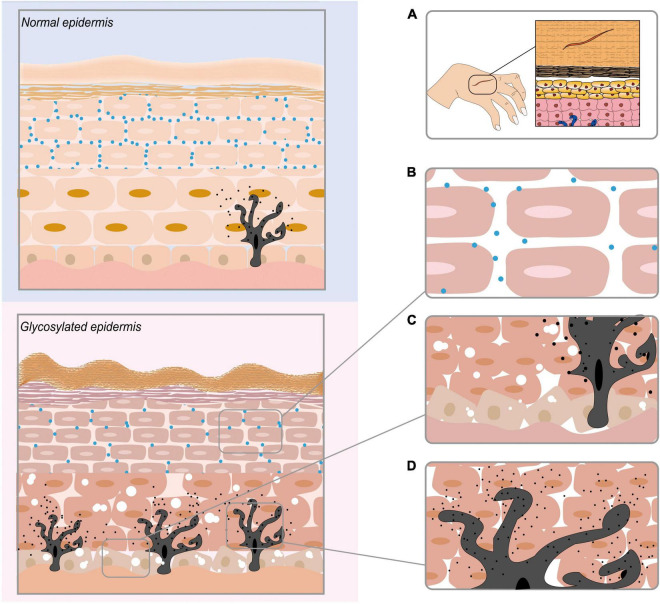
Figure 1: The effect of AGEs on the epidermis of the skin. (A) AGEs obstruct skin wound healing. (B) AGEs reduce the contents of ceramide (CER) and cholesterol (CHOL) in the epidermis, eventually leading to a reduction in skin lipid content. (C) AGEs destroy the keratinocyte cell structure in the epidermis. (D) AGEs promote the production of melanin in melanocytes. Taken from: Chen CY, Zhang JQ, Li L, Guo MM, He YF, Dong YM, Meng H, Yi F. Advanced Glycation End Products in the Skin: Molecular Mechanisms, Methods of Measurement, and Inhibitory Pathways2.
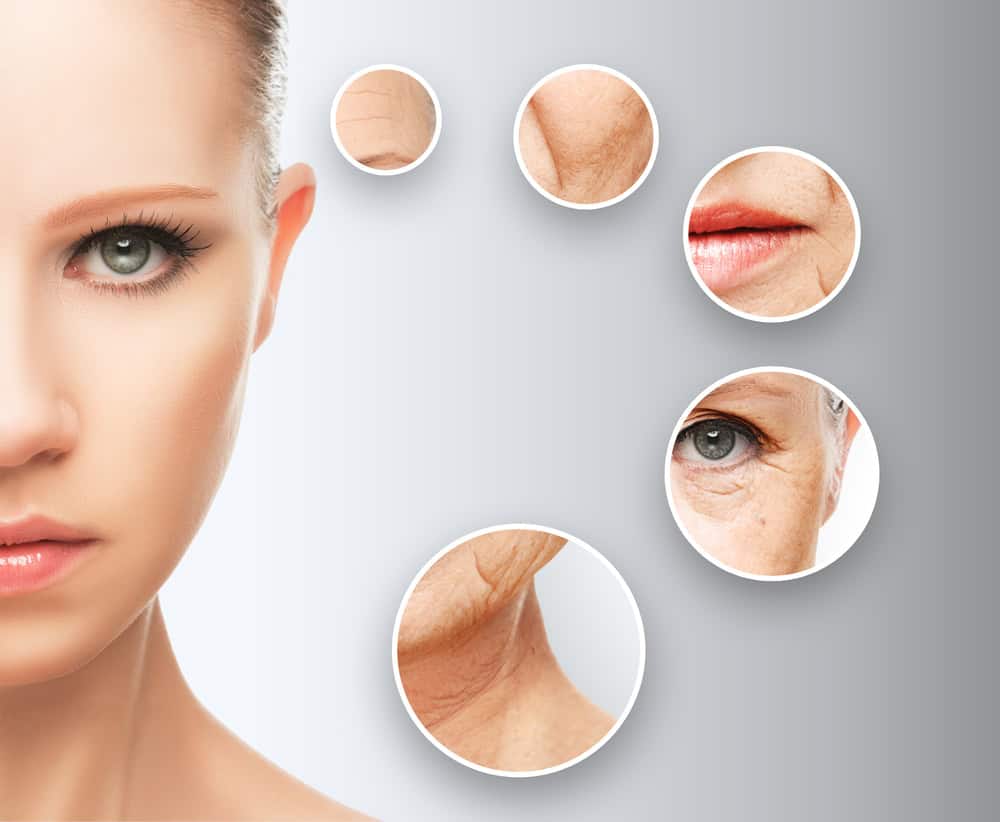
Visible signs of glycated skin often resemble accelerated, premature ageing. The skin may lose elasticity, fullness and firmness, particularly on the cheeks, around the mouth and along the jawline. Fine lines become deeper because rigid collagen fibres tolerate facial movement less effectively and do not renew efficiently. The complexion may appear lifeless, greyish or uneven because AGEs change the quality of the dermal matrix and the skin’s ability to reflect light. The skin may also become more fragile, more sensitive to UV radiation and pollution, and more prone to persistent redness, dryness and a compromised barrier. Slower wound healing is another important consequence, as glycated collagen makes normal tissue regeneration more difficult.
| What accelerates glycation? | What happens in the skin? | How can it be seen on the skin? |
| A diet rich in sugars and refined carbohydrates | More AGEs are formed and bind to collagen and elastin | Loss of firmness, wrinkles, skin sagging |
| UV radiation, especially UVA | Increases oxidative stress and collagen breakdown | Premature ageing, uneven tone, deeper wrinkles |
| Smoking, alcohol and pollution | Increase inflammation and the formation of free radicals | Greyish complexion, lower skin resilience, roughness |
| Natural ageing | AGEs gradually accumulate in tissues | Less elasticity, thinner and more sensitive skin |
| Lack of sleep, stress and a sedentary lifestyle | Poorer glucose regulation and higher metabolic burden | Tired appearance, slower recovery, loss of radiance |
In popular dermatological and aesthetic communication, the term “sugar sag” is sometimes used to describe skin laxity associated with chronic exposure to sugar and accelerated AGE formation. Although simplified, the term captures what happens in the skin: fibres that should be flexible, firm and capable of renewal become stiff, weaker and less functional.
The inside-out approach is based on the idea that skin is cared for not only externally, but also through metabolism. The first step is more stable glycaemia. This means reducing added sugars, sweetened drinks, sweets, white flour and highly processed foods, while increasing the intake of fibre, vegetables, legumes, whole grains, quality proteins and healthy fats. Meals that combine protein, fibre and fats usually lead to a slower rise in blood glucose than meals based almost entirely on refined carbohydrates.
The second step is reducing dietary AGEs. They are produced in larger amounts during frying, grilling, roasting at high temperatures and the formation of a dark, browned crust. Boiling, steaming, stewing, soups and slow-cooked dishes produce fewer AGEs. Marinating foods with lemon, vinegar or herbs before heat treatment may also be a useful strategy. The goal is not to eliminate roasted foods, but to reduce chronic exposure to highly processed, heavily browned and sugar-rich meals.
The third step is a diet rich in antioxidants and polyphenols. Berries, green leafy vegetables, green tea, cocoa, olive oil, rosemary, citrus fruits, nuts and herbs help defend against oxidative stress. This matters because glycation and oxidation reinforce each other. Some compounds, such as carnosine, alpha-lipoic acid, rosmarinic acid, resveratrol and green tea extract, show anti-glycation or antioxidant potential in experimental and partly clinical research. Nevertheless, supplementation should not replace fundamental habits: a high-quality diet, regular movement, good sleep and sun protection.
It is advisable to combine the inside-out approach with targeted skincare.
| Inside-out strategy | Cosmetic substances / active ingredients | How can they help with skin glycation? |
| Reducing oxidative stress | Vitamin C, vitamin E, ferulic acid, resveratrol, green tea extract, niacinamide | Neutralise free radicals that intensify glycation and collagen breakdown. Help maintain a more even tone, radiance and skin resilience. |
| Protecting collagen and elastin | Carnosine, aminoguanidine, alpha-lipoic acid, peptides | Carnosine and aminoguanidine are being studied as anti-glycation ingredients because they may help reduce AGE formation. Peptides can support the appearance of skin firmness and elasticity. |
| Stimulating skin renewal | Retinoids, retinal, retinol, bakuchiol, peptides | Promote epidermal renewal and support collagen synthesis. Useful because glycation reduces the skin’s ability to regenerate efficiently. |
| Strengthening the skin barrier | Ceramides, cholesterol, fatty acids, niacinamide, panthenol | Restore the protective barrier, reduce water loss and make the skin more resistant to stressors such as UV radiation, pollution and inflammation. |
| Hydration and preserving skin fullness | Hyaluronic acid, glycerin, urea, beta-glucan, ectoin | Hydrated skin appears smoother and more resilient. These ingredients help reduce dryness, roughness and loss of fullness that may be associated with glycation damage. |
| Photoprotection as a key preventive measure | Broad-spectrum SPF filters, antioxidants in daily skincare | UV radiation accelerates AGE formation and collagen breakdown. Daily SPF is one of the most important steps in preventing glycation-related ageing. |
| Evening out the complexion and restoring radiance | Vitamin C, niacinamide, azelaic acid, licorice, resveratrol | Help improve a greyish, tired and uneven complexion that may appear when the skin is burdened by oxidative stress and AGEs. |
Antioxidant serums with vitamin C, vitamin E, ferulic acid, niacinamide, resveratrol or green tea may help neutralise free radicals that drive glycation-related damage. Retinoids, derivatives of vitamin A, are important because they stimulate skin renewal, improve texture and support collagen synthesis. Peptides, such as signal peptides in firming formulas, can further support the appearance of elasticity and skin density, especially in combination with retinoids, antioxidants and good hydration.
Carnosine and aminoguanidine are particularly often mentioned in anti-glycation skincare. Carnosine is a dipeptide with antioxidant and anti-glycation potential and is used in some formulas intended to protect collagen from sugar-induced damage. Aminoguanidine is a known inhibitor of AGE formation in experimental models; however, in cosmetic practice, claims should be made carefully and should rely on formulation quality, evidence and safety of use. In other words, an anti-glycation product may be a useful addition, but it is not a replacement for SPF, retinoids, antioxidants and a balanced lifestyle.
Hydration is also important. Well-hydrated skin is more resistant to stressors and better maintains its barrier function. Ingredients such as hyaluronic acid, glycerin and ceramides help retain water, reduce transepidermal water loss and strengthen the skin’s protective layer. Because glycation can compromise the barrier and contribute to dryness and roughness, hydrating care is not merely an aesthetic addition, but part of a strategy to preserve skin resilience.
Sun protection remains essential. UV radiation, especially UVA, accelerates oxidative stress, collagen breakdown and AGE formation. Therefore, daily broad-spectrum sun protection, ideally SPF 30 or higher, is one of the most important measures against glycation-related ageing. An anti-glycation routine without photoprotection remains incomplete.
Professional treatments can additionally help improve skin texture, tone and firmness. Microneedling, chemical peels, laser treatments and collagen-stimulating procedures can support skin remodelling and reduce visible signs of ageing. However, such treatments should be individually adapted to skin type, phototype, barrier condition and any dermatological issues. They do not reverse glycation, but they can improve skin quality when they are part of a broader strategy.
A practical anti-glycation routine can be simple. In the morning: a gentle cleanser, an antioxidant serum, a moisturiser with ceramides or hyaluronic acid and broad-spectrum SPF. In the evening: cleansing, a retinoid or another skin-renewing ingredient, if needed a peptide or anti-glycation formula with carnosine, and a moisturiser to restore the barrier. In sensitive skin, active ingredients should be introduced gradually and without overuse, because an irritated barrier always ages faster.
The most important point is to understand that glycation cannot be completely stopped. It is part of natural ageing. However, its pace can be slowed. Because glycated collagen fibres are difficult to repair, prevention is more important than trying to correct damage afterwards. The best results come from combining daily habits: less added sugar, more stable glycaemia, more antioxidants, less highly processed and heavily browned food, regular physical activity, not smoking, moderate alcohol intake, sufficient sleep, good hydration, barrier-supportive skincare and daily SPF.
Glycation connects nutrition, metabolism and visible skin ageing. It shows that the skin does not age only from the outside in, but also from the inside out. The inside-out approach does not replace dermatological care, retinoids, antioxidants or sun protection; it complements them. The skin is a metabolically active organ. If we want to preserve its elasticity, radiance, firmness and capacity for renewal, an anti-ageing strategy should begin on the plate, in food preparation methods and in everyday lifestyle habits.
This approach does not work as a one-time solution, but as a long-term strategy. Diet and lifestyle habits reduce the internal formation of AGEs, while cosmetic substances applied externally help neutralise oxidative stress, preserve the barrier, stimulate renewal and protect collagen. It is precisely the combination of metabolic balance and targeted skincare that makes the inside-out approach the most logical model for mitigating skin glycation.
References
1. Gkogkolou P, Böhm M. Advanced glycation end products: Key players in skin aging? Dermatoendocrinol. 2012 Jul 1;4(3):259-70. doi: 10.4161/derm.22028. PMID: 23467327; PMCID: PMC3583887.
2. Chen CY, Zhang JQ, Li L, Guo MM, He YF, Dong YM, Meng H, Yi F. Advanced Glycation End Products in the Skin: Molecular Mechanisms, Methods of Measurement, and Inhibitory Pathways. Front Med (Lausanne). 2022 May 11;9:837222. doi: 10.3389/fmed.2022.837222. PMID: 35646963; PMCID: PMC9131003.
3. Dyer DG, Dunn JA, Thorpe SR, Bailie KE, Lyons TJ, McCance DR, Baynes JW. Accumulation of Maillard reaction products in skin collagen in diabetes and aging. J Clin Invest. 1993 Jun;91(6):2463-9. doi: 10.1172/JCI116481. PMID: 8514858; PMCID: PMC443306.
4. Van Putte L, De Schrijver S, Moortgat P. The effects of advanced glycation end products (AGEs) on dermal wound healing and scar formation: a systematic review. Scars Burn Heal. 2016 Dec 5;2:2059513116676828. doi: 10.1177/2059513116676828. PMID: 29799552; PMCID: PMC5965313.
5. Crisan M, Taulescu M, Crisan D, Cosgarea R, Parvu A, Catoi C, Drugan T. Expression of advanced glycation end-products on sun-exposed and non-exposed cutaneous sites during the ageing process in humans. PLoS One. 2013 Oct 7;8(10):e75003. doi: 10.1371/journal.pone.0075003. PMID: 24116020; PMCID: PMC3792075.
6. Danby FW. Nutrition and aging skin: sugar and glycation. Clin Dermatol. 2010 Jul-Aug;28(4):409-11. doi: 10.1016/j.clindermatol.2010.03.018. PMID: 20620757.
7. Uribarri J, Woodruff S, Goodman S, Cai W, Chen X, Pyzik R, Yong A, Striker GE, Vlassara H. Advanced glycation end products in foods and a practical guide to their reduction in the diet. J Am Diet Assoc. 2010 Jun;110(6):911-16.e12. doi: 10.1016/j.jada.2010.03.018. PMID: 20497781; PMCID: PMC3704564.
8. Chen J, Waqas K, Tan RC, Voortman T, Ikram MA, Nijsten TEC, de Groot LCPGM, Uitterlinden AG, Zillikens MC. The association between dietary and skin advanced glycation end products: the Rotterdam Study. Am J Clin Nutr. 2020 Jul 1;112(1):129-137. doi: 10.1093/ajcn/nqaa117. PMID: 32453418; PMCID: PMC7326595.
9. de Courten B, de Courten MP, Soldatos G, Dougherty SL, Straznicky N, Schlaich M, Sourris KC, Chand V, Scheijen JL, Kingwell BA, Cooper ME, Schalkwijk CG, Walker KZ, Forbes JM. Diet low in advanced glycation end products increases insulin sensitivity in healthy overweight individuals: a double-blind, randomized, crossover trial. Am J Clin Nutr. 2016 Jun;103(6):1426-33. doi: 10.3945/ajcn.115.125427. Epub 2016 Mar 30. PMID: 27030534.
10. Ghodsi R, Kheirouri S. Carnosine and advanced glycation end products: a systematic review. Amino Acids. 2018 Sep;50(9):1177-1186. doi: 10.1007/s00726-018-2592-9. Epub 2018 Jun 1. PMID: 29858687.
11. Narda M, Peno-Mazzarino L, Krutmann J, Trullas C, Granger C. Novel Facial Cream Containing Carnosine Inhibits Formation of Advanced Glycation End-Products in Human Skin. Skin Pharmacol Physiol. 2018;31(6):324-331. doi: 10.1159/000492276. Epub 2018 Sep 10. PMID: 30199874; PMCID: PMC6262686.
12. Kellow NJ, Coughlan MT, Reid CM. Association between habitual dietary and lifestyle behaviours and skin autofluorescence (SAF), a marker of tissue accumulation of advanced glycation endproducts (AGEs), in healthy adults. Eur J Nutr. 2018 Sep;57(6):2209-2216. doi: 10.1007/s00394-017-1495-y. Epub 2017 Jun 27. PMID: 28656390.