What are seaweed, algae, and astaxanthin?
Astaxanthin, a potent carotenoid, is primarily derived from microalgae, while seaweed and other algae encompass a broad spectrum of macroscopic and microscopic photosynthetic organisms.
Seaweeds are macroscopic marine algae, broadly classified into red, brown, and green varieties based on their pigmentation, and are rich in minerals, carbohydrates, and proteins2 (Figure 1).
Figure 1: Sargassum sp.
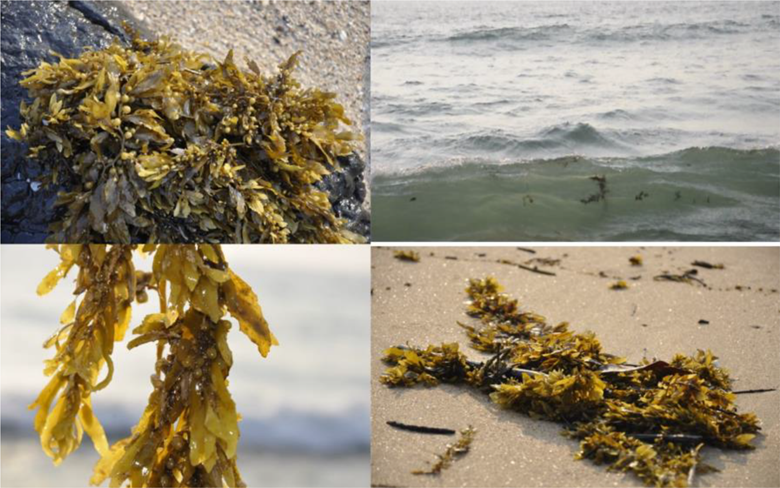
Taken from: Abdi G, Karande VC, Mohammed A, Abbasi Tarighat M, Wen Goh K, Abdul Kari Z, Seong Wei L, Ahmad Mohd Zain MR, Mohammadi M, Ee Lee G and Barwant MM (2022) Pharmacological potential of Sargassum sp. of west coast of Maharashtra Kunkeshwar, India. Front. Mar. Sci. 9:1011218. doi: 10.3389/fmars.2022.1011218
In contrast, microalgae such as Haematococcus pluvialis are microscopic, unicellular organisms renowned for their biosynthesis of potent carotenoids like astaxanthin3. Astaxanthin, a xanthophyll carotenoid, is particularly noted for its exceptional antioxidant capacity, significantly surpassing that of other well-known antioxidants such as beta-carotene and alpha-tocopherol4.
How are they sourced for industry purposes?
The industrial sourcing of these compounds leverages the rapid growth rates and high metabolic plasticity of microalgae, enabling efficient cultivation for targeted compound extraction5. Specifically, Haematococcus pluvialis is extensively cultivated for its high astaxanthin content, which exhibits a broad spectrum of pharmacological effects, including anti-inflammatory, anti-diabetic, and neuroprotective properties6,7.
Despite these promising attributes, astaxanthin’s clinical applicability is often hampered by its poor bioavailability, low stability, and limited solubility, necessitating advanced formulation strategies for enhanced therapeutic efficacy8. Furthermore, the diverse biochemical profiles of various algae and seaweeds yield a wide array of co-nutrients, including specific B vitamins and polyphenols, which can synergistically enhance the bioavailability and therapeutic impact of astaxanthin9.
For instance, the xanthophylls found in algae, such as fucoxanthin from brown seaweeds, are recognized for their anti-tumor and anti-inflammatory activities. Zeaxanthin is a structural isomer of lutein. Both isomers are usually found in various foods, mainly found in green leafy vegetables and algae10.
The microalga Haematococcus pluvialis is recognized as the optimal natural source of astaxanthin11,12 (Figure 2), while other microalgae such as Chlorella zofingiensis also show promise13.
Figure 2: Light microscopic images of H. pluvialis cells in life cycle
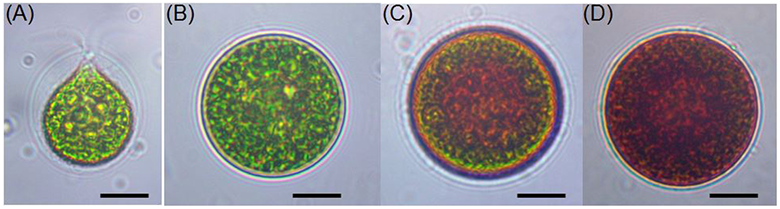
(A) Green vegetative motile cell; (B) Green vegetative palmella cell; (C) Astaxanthin accumulating palmella cell in transition to aplanospore; (D) Astaxanthin accumulated aplanospore cell. Scale bar: 10 μm. Taken from: Shah MMR, Liang Y, Cheng JJ and Daroch M (2016) Astaxanthin-Producing Green Microalga Haematococcus pluvialis: From Single Cell to High Value Commercial Products. Front. Plant Sci. 7:531. doi: 10.3389/fpls.2016.00531
Therapeutic potential of these natural compounds
Therapeutic potential of these natural compounds includes immune-modulatory, antioxidative, and anti-inflammatory properties, contributing to overall health and disease prevention14,15.
Astaxanthin exhibits superior antioxidant capabilities compared to other common antioxidants16. Its unique molecular structure enables efficient quenching of singlet oxygen and scavenging of free radicals17,18. Furthermore, astaxanthin demonstrates neuroprotective effects by reducing pro-inflammatory cytokine expression and reactive oxygen species production19.
Beyond astaxanthin, marine natural products from seaweeds present diverse bioactivities, including anti-aging, anti-cancer, anti-diabetic, and fertility-enhancing properties20. Marine algae are significant sources of proteins, fatty acids, carbohydrates, vitamins, and minerals with applications in pharmaceutical and nutraceutical industries21.
Seaweeds are rich in bioactive metabolites and represent a promising resource for drug development22,23. They contain pigments like fucoxanthin, polysaccharides like fucoidan, and a wide range of micronutrients15. Their bioactive compounds, such as phycocyanin, lutein, zeaxanthin, and β-carotene, further support their role as a functional food source14.
Marine algae are considered underexploited bioresources with strong biomedical potential24, showing antioxidant, antibacterial, antiviral, and anti-inflammatory effects24.
Neuroprotective effects are also observed, particularly through modulation of pathways such as NF-κB/Akt and MAPK25,26, contributing to protection against neurodegenerative diseases21. Additional evidence highlights the importance of secondary metabolites and sulfated phenolic compounds in delivering antioxidant and antimicrobial benefits23,26,27.
Seaweed bioactives such as phycobiliproteins and fucoidans further contribute to antioxidant, anti-inflammatory, and antiviral effects28. Their complex composition – including saccharides, proteins, phenolics, fatty acids, vitamins, and minerals – makes them highly valuable for dietary applications14,29.
Astaxanthin for eye health and skin protection
Astaxanthin plays a key role in protecting ocular tissues from oxidative stress and supporting retinal health. Additional carotenoids such as lutein and zeaxanthin contribute to protection against oxidative damage in the eye30.
Marine bioactives also modulate inflammatory pathways by influencing macrophage activity and reducing cytokine production31,32. Compounds such as astaxanthin and fucoxanthin reduce IL-6 and oxidative stress, contributing to neuroprotection26.
They also attenuate microglial activation, relevant in neurodegenerative diseases such as Parkinson’s disease33. Phlorotannins from brown algae exhibit strong antioxidant properties and modulate oxidative stress-related enzymes34,29,35, making them promising candidates for nutraceutical and pharmaceutical use22,36.
Seaweed in supplements and functional food
Seaweed extracts are widely used in functional foods due to their bioactive compounds such as phlorotannins and carotenoids37,38. These compounds provide immunomodulatory and antioxidant benefits34,39,32.
Polysaccharides like fucoidan and laminarin contribute to immune enhancement and show anti-diabetic and antimicrobial effects15. Brown algae compounds like fucoxanthin regulate oxidative stress and inflammation40.
Algae omega potential in supplementation
Phlorotannins and other algal metabolites also show potential in neurodegenerative disease prevention41.
Algae are rich in omega-3 fatty acids, essential for cardiovascular and cognitive health42. These compounds improve neuronal membrane function and synaptic plasticity43, supporting memory and learning44.
Sustainability of algal omega-3
Algae cultivation represents a sustainable alternative to fish-derived omega-3 sources, reducing environmental impact and overfishing45,46.
Conclusion
Marine-derived bioactives, particularly astaxanthin and seaweed compounds, offer significant therapeutic potential. Their mechanisms include reducing oxidative stress, modulating inflammation, and protecting against neurodegeneration47–50.
Microalgae-derived compounds such as lutein and sulfated polysaccharides further contribute to antioxidant defense and disease prevention51. Their rich composition makes them promising ingredients for functional foods and nutraceuticals targeting chronic and neurodegenerative diseases52.
References
- Matos J, et al. Seaweed bioactives potential as nutraceuticals and functional ingredients: A review. J Food Compos Anal. 2024;133:106453.
- Abdi G, et al. Pharmacological potential of Sargassum sp. Front Mar Sci. 2022;9:1011218.
- Zhang L, et al. Global seaweed farming and processing in the past 20 years. Food Prod Process Nutr. 2022;4:1.
- Krohn I, et al. Health benefits of microalgae and their microbiomes. Microb Biotechnol. 2022;15(7):1966.
- Ferdous UT, Yusof ZNB. Medicinal prospects of antioxidants from algal sources in cancer therapy. Front Pharmacol. 2021;12:593116.
- Das B, Bhattarai A. The versatility of algae in addressing global sustainability challenges. Front Bioeng Biotechnol. 2025;13:1621817.
- Oslan SNH, et al. Haematococcus pluvialis as a source of astaxanthin. Molecules. 2021;26(21):6470.
- Abdelazim K, et al. Production and therapeutic use of astaxanthin in the nanotechnology era. Pharmacol Rep. 2023;75(4):771.
- Wu JY, et al. Utility of algae as sources of high-value nutritional ingredients. Front Nutr. 2023;10:1277343.
- Pereira AG, et al. Xanthophylls from the sea. Mar Drugs. 2021;19(4):188.
- Bassani JC, et al. Haematococcus pluvialis as a source of bioactives. Microorganisms. 2025;13(11):2606.
- Samhat K, et al. Astaxanthin production by H. pluvialis. Bioresour Bioprocess. 2023;10:1.
- Villaró S, et al. Microalgae-derived astaxanthin. Foods. 2021;10(10):2303.
- Ahmed N, et al. Marine algae diversity and bioactive compounds. Meas Food. 2024;14:100163.
- Mandal AK, et al. Seaweed in the diet. Pharmaceuticals. 2025;18(3):367.
- Zhao W, et al. Antioxidant capacity improvements. Front Immunol. 2022;13:940929.
- Cao Y, et al. Dietary astaxanthin benefits. Crit Rev Food Sci Nutr. 2021;63(18):3019.
- Ebrahimi B, et al. Marine bioactive compounds in chronic disease. Front Nutr. 2023;9:1047026.
- Wang J, et al. Phytochemicals and inflammation. Front Pharmacol. 2023;14:1109576.
- Hu C. Marine natural products and immunity. Nat Prod Bioprospect. 2024;14(1):1.
- Gupta S, et al. Marine algae and pharmaceutical potential. Bull Natl Res Cent. 2025;49:1.
- Choudhary B, et al. Edible seaweeds as nutraceuticals. Front Mar Sci. 2021;8:740054.
- Cotas J, et al. Seaweed for drug development. Int J Mol Sci. 2024;25(2):797.
- Cadâr E, et al. Bioactive compounds of marine algae. Mar Drugs. 2025;23(4):152.
- Karthikeyan A, et al. Marine bioactive compounds and disease. J Genet Eng Biotechnol. 2022;20(1):14.
- Naik B, et al. Marine algal metabolites and neurodegeneration. Front Mar Sci. 2024;11:1370839.
- Taglioni E, et al. Sulfated phenolic compounds in seaweeds. Anal Bioanal Chem. 2025.
- Ashworth H, et al. Seaweed and freeze drying. Front Mar Sci. 2024;11:1386418.
- Duan X, et al. Phlorotannins from seaweeds. Crit Rev Food Sci Nutr. 2023;65(5):833.
- Yu BS, et al. Microalgae and sustainability. Microb Cell Fact. 2024;23:1.
- Matin M, et al. Anti-inflammatory effects of algae. Molecules. 2024;29(19):4695.
- Monroy-García IN, et al. Macroalgae and oxidative stress. Stresses. 2025;5(1):22.
- Rahman MM, et al. Natural products in Parkinson’s disease. Front Pharmacol. 2022;13:976385.
- Farghali M, et al. Seaweed applications review. Environ Chem Lett. 2022;21(1):97.
- Nawaz T, et al. Antioxidant capacity of microorganisms. J Umm Al-Qura Univ Appl Sci. 2023;10(1):232.
- Fonseca-Barahona I, et al. Bioactives from brown algae. ChemBioEng Rev. 2025;12(3).
- Araújo R, et al. Algae production industry in Europe. Front Mar Sci. 2021;7:626389.
- Meirelles BG, et al. Seaweed extracts for cosmetics. J Appl Phycol. 2023;35(6):3041.
- Marmelo I, et al. Functional aquafeeds and algae. Front Mar Sci. 2024;11:1325244.
- Venkatachalam S, et al. Fucoxanthin extraction. Waste Biomass Valor. 2025.
- Kwon SY, et al. Phlorotannins in neurodegenerative disorders. Front Mol Neurosci. 2023;16:1193590.
- Nielsen CW, et al. Nutritional value of seaweed. J Appl Phycol. 2024;36(5):2795.
- Zhao W, et al. Marine omega-3 and health. Front Nutr. 2025;12:1674047.
- Picone P, et al. Mediterranean diet and brain health. Front Nutr. 2024;11:1489489.
- Cheong KL, et al. Marine algae sustainability. Front Mar Sci. 2024;11:1360425.
- Derbyshire E, et al. Omega-3 gaps and solutions. Front Nutr. 2024;11:1325099.
- Cokdinleyen M, et al. Brown algae and Alzheimer’s disease. Nutrients. 2024;16(24):4394.
- Jy L, et al. Bioactive compounds in Alzheimer’s treatment. Yale J Biol Med. 2024;97(2):205.
- Martins BCC, et al. Bioavailability of algae compounds. Mar Drugs. 2022;20(6):362.
- Wang T, et al. Red algae and neuroprotection. Mar Drugs. 2025;23(7):274.
- Yang N, et al. Microalgae antioxidants. Front Plant Sci. 2023;14:1144326.
- Piovan A, et al. Carotenoids and neuroinflammation. Mol Neurobiol. 2021.