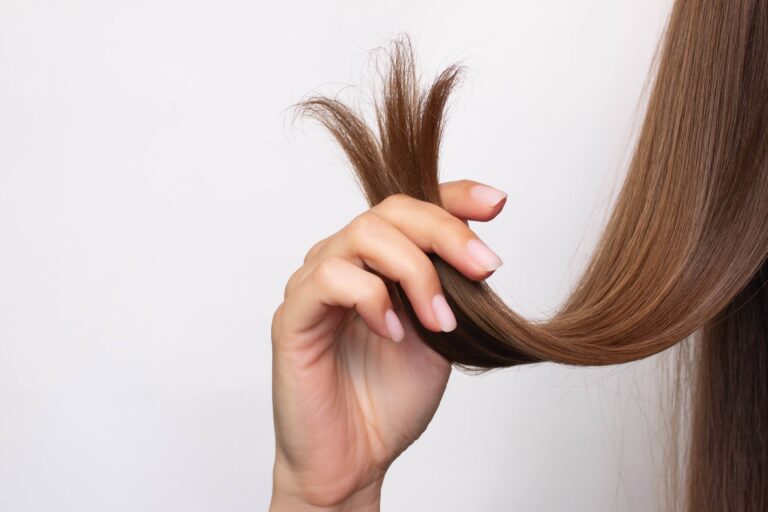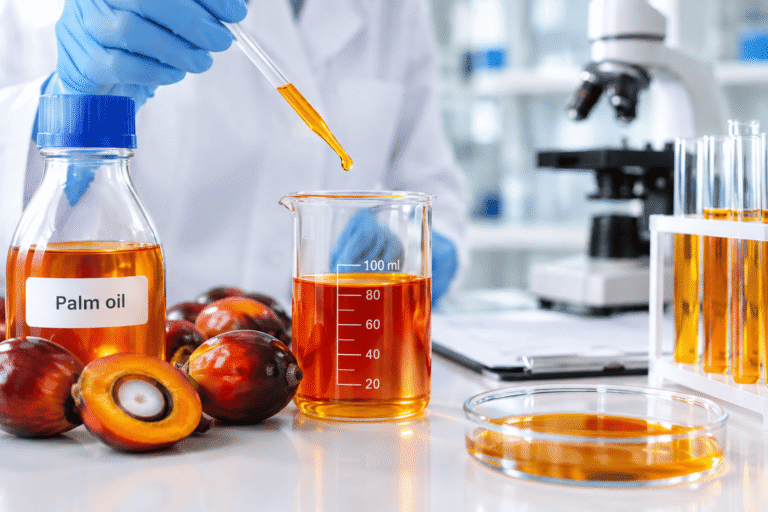
Keratin is a structural fibrous protein and a major component of hair, skin and nails. Its biological function is closely related to its high cysteine content, which enables the formation of disulfide bonds responsible for the mechanical strength, elasticity and resistance of keratinized tissues.
In its native form, keratin is insoluble and poorly bioavailable. This intrinsic property has historically limited its use in oral supplementation, despite its central role in human tissue structure. In this context, the key challenge is the keratin transformation into bioavailable form that can be absorbed, distributed and biologically utilized.
Within nutricosmetics, this has led to the development of hydrolyzed keratin peptides that deliver bioavailable amino acids to support keratin formation and the maintenance of keratin-rich tissues. Among these approaches, sheep wool has been successfully valorized as a source of keratin, giving new purpose to a traditionally underutilized agricultural by-product. Through controlled hydrolysis processes, this natural raw material is converted into bioavailable keratin peptides for nutricosmetic applications. Its compositional proximity to human keratin and high content of sulfur-containing amino acids make it a particularly relevant source.
The science behind bioactive keratin: a controlled technological approach
Wool represents a well-suited raw material for keratin extraction due to its structural similarity to human keratin and its richness in sulfur amino acids, particularly cysteine. However, the biological relevance of keratin depends entirely on its conversion into a stable and bioavailable peptides.
To ensure consistency, safety and functional integrity, the entire production chain is governed by a strict specification framework. Wool is sourced from controlled New Zealand sheep breeds for our white keratin and French for our pigmented keratin, where animal welfare standards are strictly enforced, including the ban of mulesing. Beyond ethical considerations, raw material handling is tightly controlled from shearing to processing to ensure optimal quality and traceability.
This upstream control is reinforced by an extensive safety assessment strategy. Each batch undergoes multi-residue analysis covering more than 400 targeted substances, as part of a structured risk management approach designed to ensure high levels of chemical and microbiological safety. This rigorous framework ensures a highly standardized raw material suitable for nutritional applications.
Keratin transformation is then achieved through a patented low-temperature, low-pressure hydrolysis process developed by Kerat’Innov, in a manufacturing facility located in France, operating under ISO 9001 and ISO 22000 certified quality and food safety management systems.
This proprietary process is specifically designed to preserve molecular integrity by avoiding protein denaturation. Above 100°C, proteins begin to undergo structural modifications and loss of biological function, while higher temperatures may lead to degradation and formation of unwanted by-products. Maintaining controlled processing conditions is therefore essential to preserve quality.
Under these mild conditions, the native amino acid profile is preserved, particularly cysteine and cystine, which are essential to keratin structure through disulfide bonding. Controlled hydrolysis then breaks down protein chains into low molecular weight peptides ranging from 400 to 700 Daltons, a range compatible with solubility and intestinal absorption.
The final outcome is a standardized bioactive keratin peptides, produced under tightly controlled conditions, ensuring reproducibility, safety and biological relevance for nutricosmetic applications.
Cynatine® HNS: supporting hair, skin and nails structure
Cynatine® HNS illustrates how a controlled keratin peptide system can translate into clinically measurable outcomes. It provides a balanced amino acid profile with a high proportion of cysteine, delivered in a stabilized peptide form that is essential for biological activity. Once absorbed, these low molecular weight peptides support keratin synthesis pathways and contribute to structural maintenance of keratinized tissues.
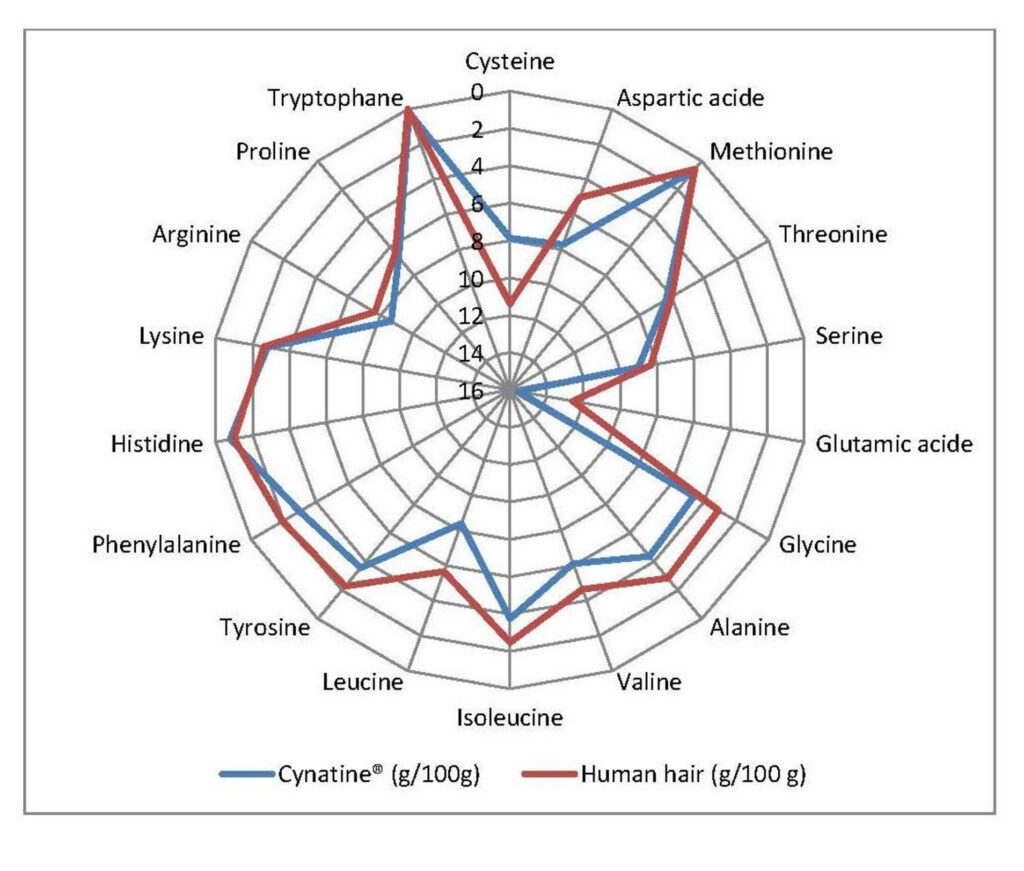
The efficacy of Cynatine® HNS has been evaluated in multiple randomized, double-blind, placebo-controlled human clinical studies. At a daily dose of 500 mg, consistent improvements have been observed across key parameters related to hair, skin and nails.
- Reduces hair loss
- Improves hair growth dynamics, with a +12% increase in the anagen phase and a -12% decrease in the telogen phase
- Increases hair fiber strength and resistance to breakage
- Improves nail growth and hardness, while reducing the tendency to break
- Enhances skin hydration, elasticity and overall appearance, including an -11% reduction in wrinkles and improved skin smoothness in 60% of users
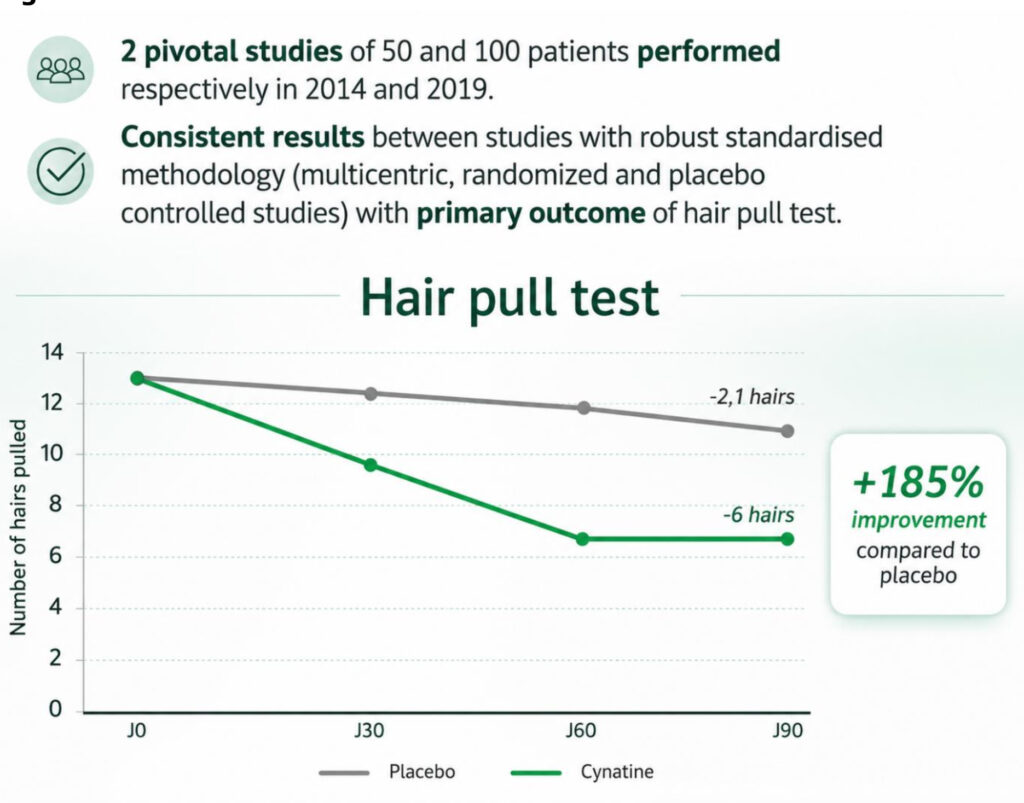
These results highlight the importance of delivering bioavailable keratin-derived peptides rather than native insoluble proteins, in order to effectively support physiological mechanisms involved in tissue renewal and resilience.
Extending beyond structure: targeting pigmentation pathways
In addition to its well-known benefits for hair, skin, and nails, pigmented keratin is also available to support both hair and skin pigmentation. Hair graying and skin tone changes are associated with biological processes involving melanocyte activity and melanin synthesis, which progressively decline with ageing and oxidative stress.
Within this biological framework, black wool-derived bioactive peptides also offer opportunities to target pigmentation-related pathways.
Melatine®: supporting hair pigmentation
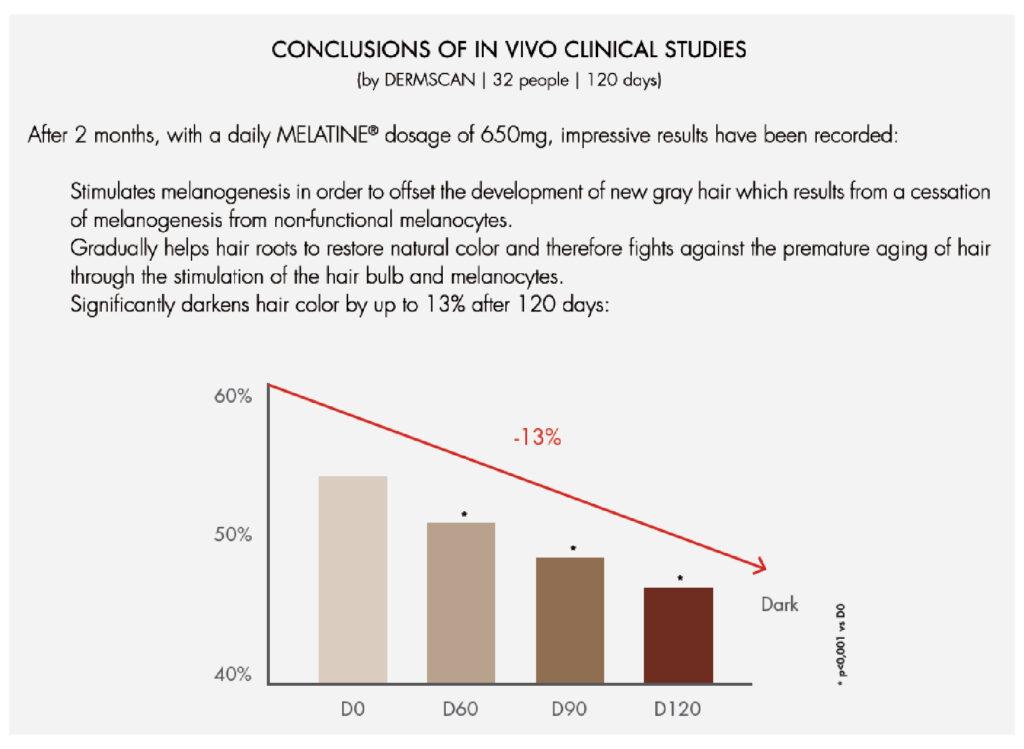
Melatine® is designed to support the biological processes involved in hair pigmentation, with a specific focus on melanogenesis within the hair follicle.
By acting on melanin production pathways, it helps maintain natural hair color and supports the management of early signs of graying. Its activity is directed at upstream biological regulation rather than the hair fiber itself, addressing pigmentation at the follicular level.
Its relevance has been confirmed through clinical evaluation, positioning Melatine® as a complementary approach to structural keratin supplementation. While most hair actives primarily target fiber strength and quality, Melatine® introduces a functional dimension focused on color maintenance.
Melaline®: supporting skin pigmentation and tone uniformity
Melaline® applies the same biological rationale to skin physiology, focusing on pigmentation pathways involved in complexion uniformity and tone balance.
It supports melanocyte activity and melanin production, contributing to improved skin tone homogeneity. In addition, it supports the skin’s natural response to environmental stressors, including UV exposure, which are known to influence pigmentation processes.
Clinical and mechanistic data support its role in addressing pigmentation-related concerns within a broader nutricosmetic framework, where skin appearance is considered a dynamic outcome of multiple biological pathways.
Conclusion
The transformation of wool into bioactive keratin peptides illustrates a structured and science-based approach to nutricosmetics. By preserving amino acid integrity and ensuring peptide bioavailability, this technology enables targeted support of both structural and functional dimensions of beauty.
Cynatine® HNS addresses the fundamental integrity of hair, skin and nails through bioavailable keratin peptides, while Melatine® and Melaline® extend this platform to pigmentation pathways, targeting the biological mechanisms underlying hair color and skin tone maintenance.
Building on the science behind keratin and its applications, LC Ingredients operates as a premium ingredient distributor for the food supplement and cosmetics industries. The company follows a science-driven approach, with a strong focus on clinically supported ingredients and evidence-based innovation, bridging raw material science with application-oriented product development.
This integrated approach reflects a broader industry shift toward more precise, clinically validated and multi-target solutions in the development of next-generation nutricosmetic products.