
Market context and strategic drivers
The global omega-3 category continues to expand, supported by demographic, clinical, and structural market drivers. Forecasts project sustained growth over the next decade, driven primarily by aging populations, a growing emphasis on preventive healthcare, and broad professional acceptance of EPA and DHA for cardiovascular, cognitive, and inflammatory health. Omega-3s are increasingly perceived by consumers as essential nutrients rather than optional supplements, reinforcing baseline demand across life stages.
The diversification of sales channels further supports market expansion. Direct-to-consumer platforms, personalized nutrition models, and subscription services are enabling premiumization and more targeted product offerings. At the upper end of the market, specialty formats – including phospholipid-bound omega-3s, ultra-concentrated EPA/DHA oils, and life-stage–specific formulations (prenatal, cognitive, pediatric) – are driving innovation and margin growth.
Source innovation and premiumization
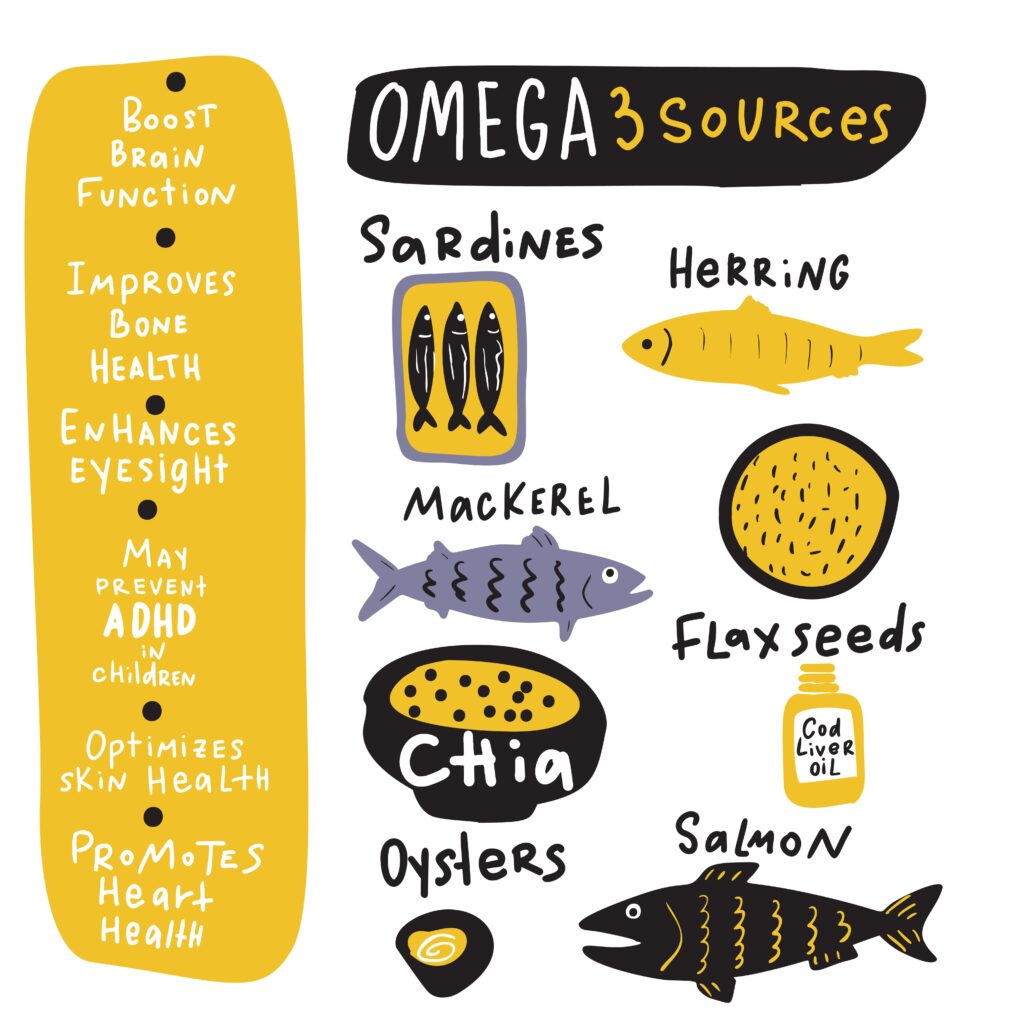
A pronounced shift toward alternative and sustainable omega-3 sources is reshaping the supply landscape. Algae-derived DHA and EPA are the fastest-growing segment, meeting consumer demand for vegan, allergen-free, and traceable ingredients while reducing reliance on marine ecosystems. Major ingredient suppliers’ investment in algal production capacity reflects confidence in long-term scalability and regulatory acceptance.
In parallel, krill oil continues to occupy a premium niche due to its phospholipid-bound omega-3s and naturally occurring astaxanthin, positioning it on bioavailability and lower dose requirements. Additional interest is emerging in fermented and seed-derived oils, reflecting broader experimentation with non-traditional lipid sources to mitigate marine supply risks.
Premiumization strategies increasingly emphasize purity, concentration, and delivery efficiency. Advances in purification and concentration technologies now enable high-EPA/DHA oils with 50–70% actives, enabling dose compression and improved consumer compliance. Certification schemes and sustainability credentials have become integral to differentiation, particularly in markets where retailer requirements and NGO scrutiny are intensifying.
Delivery format innovation
While softgel capsules remain the dominant dosage form because of dosing precision and oxidative stability, omega-3 delivery formats are rapidly diversifying. Liquid, emulsion, powder, chewable, and gummy formats are expanding access for populations such as children, older adults, and individuals with pill fatigue or swallowing difficulties.
From a formulation perspective, gummies and chewables represent both a high-growth opportunity and a technical challenge. Omega-3 oils’ poor solubility and sensory characteristics require advanced encapsulation and separation strategies to maintain stability, taste, and texture. Microencapsulation, multilayer systems, and delayed-release technologies are increasingly used to enable higher oil loading while preserving product quality.
Powdered omega-3 formats – typically produced via spray-drying or oil-in-matrix systems – are gaining traction in sports nutrition, functional foods, and personalized nutrition. Nano-emulsified and micellar systems enable clear beverages and “water-compatible” formulations that were previously impractical for lipophilic fatty acids.
Formulation and processing constraints
Omega-3 oils pose persistent technical challenges related to oxidation, sensory stability, and bioavailability. Their high degree of unsaturation makes them particularly vulnerable to oxidative degradation, necessitating stringent control throughout processing, packaging, and shelf life. Encapsulation, antioxidant systems, inert-gas handling, and light-protective packaging are now standard components of omega-3 product design.
Taste and odor masking remain critical barriers to consumer acceptance, especially in non-capsule formats. Formulators increasingly combine encapsulation with natural flavor systems and carrier matrices to minimize off-notes and avoid chemical interactions that could accelerate degradation.
Bioavailability has emerged as a key differentiator. Conventional ethyl-ester omega-3s require dietary fat for optimal absorption, limiting effectiveness in low-fat diets or during fasting. Phospholipid-based delivery systems and micellar technologies address this limitation by facilitating self-assembly into absorbable structures within the gastrointestinal tract. These approaches not only enhance uptake but also expand the range of viable applications, including low-fat and aqueous formats.
Dose density imposes an additional constraint, particularly in gummies and functional foods. Achieving clinically relevant EPA/DHA levels in small serving sizes requires highly concentrated oils, optimized fillers, and, in some cases, multilayer or compartmentalized designs.
Sustainability, traceability, and supply risk
Sustainability considerations are now central to omega-3 sourcing decisions. Wild fish stocks face growing pressure from overfishing, climate variability, and regulatory intervention, contributing to supply volatility and cost fluctuations. Industry reports highlight the risk of a sustained supply–demand imbalance, reinforcing the strategic importance of diversified sourcing.
Traceability and certification are now non-negotiable for many buyers. Retailers, brand owners, and institutional customers increasingly require detailed documentation of species, origin, harvest method, and chain of custody, along with third-party sustainability certifications. In response, suppliers are investing in transparent reporting systems, circular production models, and carbon-neutral or low-impact manufacturing practices.
Biotechnological innovation
To address both sustainability and performance constraints, innovation is accelerating across the omega-3 value chain. Alternative bioproduction methods – including microalgae cultivation and precision fermentation – are gaining momentum as scalable, controllable sources of EPA and DHA. Closed-loop systems that use renewable inputs and industrial byproducts illustrate how omega-3 production aligns with broader ESG objectives.
Advances in encapsulation, phospholipid delivery, and purification technologies are enabling higher-purity, lower-odor oils suitable for medical nutrition, infant formulas, and advanced functional foods. Although some fermentation-based approaches remain at pre-commercial or early-scale stages, they could represent a long-term disruption to traditional marine-based supply models (Table 1).
Table 1. Biotechnological Innovation
| Innovation | Description |
| Advanced encapsulation | Use of spray-dried microcapsules, alginate beads, liposomes, and protein complexes in beverages, bars, and powders. These protect oils, control release, and effectively mask taste. |
| Phospholipid / micellar delivery | New concentrates (e.g., PL+, algal polar-lipid oils) leverage natural lecithins to form micelles in the gut, improving absorption even on low-fat diets. Enables cold-mix shots and “skinny” formulations without added fat. |
| Precision fermentation | Research into engineered yeast and plants (e.g., transgenic canola, yeast strains) that produce EPA/DHA. Not yet mainstream but promising for scalable, controlled omega-3 production. |
| Sustainable extracts | Advances in extraction/purification (molecular distillation, chromatography) create ultra-pure, low-odor oils. Pharmaceutical-grade EPA/DHA (USP or pharmacopoeia certified) now target medical and infant nutrition markets. |
Regulatory landscape
Regulatory frameworks continue to shape formulation and communication strategies. In the United States, omega-3 products are limited to quantitative declarations and structure–function claims, while nutrient-content claims remain prohibited. In contrast, the European Union permits a broader range of authorized health claims for EPA and DHA, provided compositional and dosage criteria are met.
Quality and safety standards are tightening globally, with increased scrutiny of oxidation markers, contaminants, and label accuracy. Industry-led certification programs and anticipated traceability requirements are reinforcing the need for robust quality management and documentation throughout the supply chain.
Strategic implications for B2B stakeholders
For ingredient suppliers and brand owners, differentiation in the omega-3 category increasingly hinges on a combination of scientific substantiation, technological sophistication, and supply-chain credibility. Clean, certified sourcing, advanced delivery systems, novel dosage formats, and transparent sustainability narratives are viable pathways to premium positioning.
At the same time, the category faces structural risks stemming from resource constraints, regulatory scrutiny, and emerging competitive technologies. Companies that proactively invest in alternative sources, diversify their supply, and align product development with evolving regulatory and consumer expectations are best positioned for long-term resilience.
In summary, the omega-3 ingredient landscape is shifting from a commodity-driven market to a technologically intensive, sustainability-constrained innovation space. Success will favor players that integrate formulation science, bioavailability optimization, and traceable sourcing into cohesive, evidence-based value propositions.
Sources:
Omega-3 Supplements Market Size Set to Reach US$ 17.08 Billion by 2032, Driven by Rising Demand for Heart, Brain, and Immune Health | by DataM Intelligence
Algae Omega-3 Ingredients Market Size And Share Report, 2032
https://straitsresearch.com/report/algae-omega-3-ingredients-market
Omega-3 sustainability: Pressing environmental, political and social issues driving change in the industry
Effect of packaging and encapsulation on the oxidative and sensory stability of omega‐3 supplements – PMC https://pmc.ncbi.nlm.nih.gov/articles/PMC10003024/
New Study: Aker BioMarine’s PL+ Innovation Boosts Omega-3 Absorption
https://www.akerbiomarine.com/news/new-study-aker-biomarines-pl-innovation-boosts-omega-3-absorption
Meet the omega-3 startup that grows microalgae from upcycled whisky byproducts
FDA Releases Small Entity Compliance Guide on Omega-3 Fatty Acids Final Rule | FDA