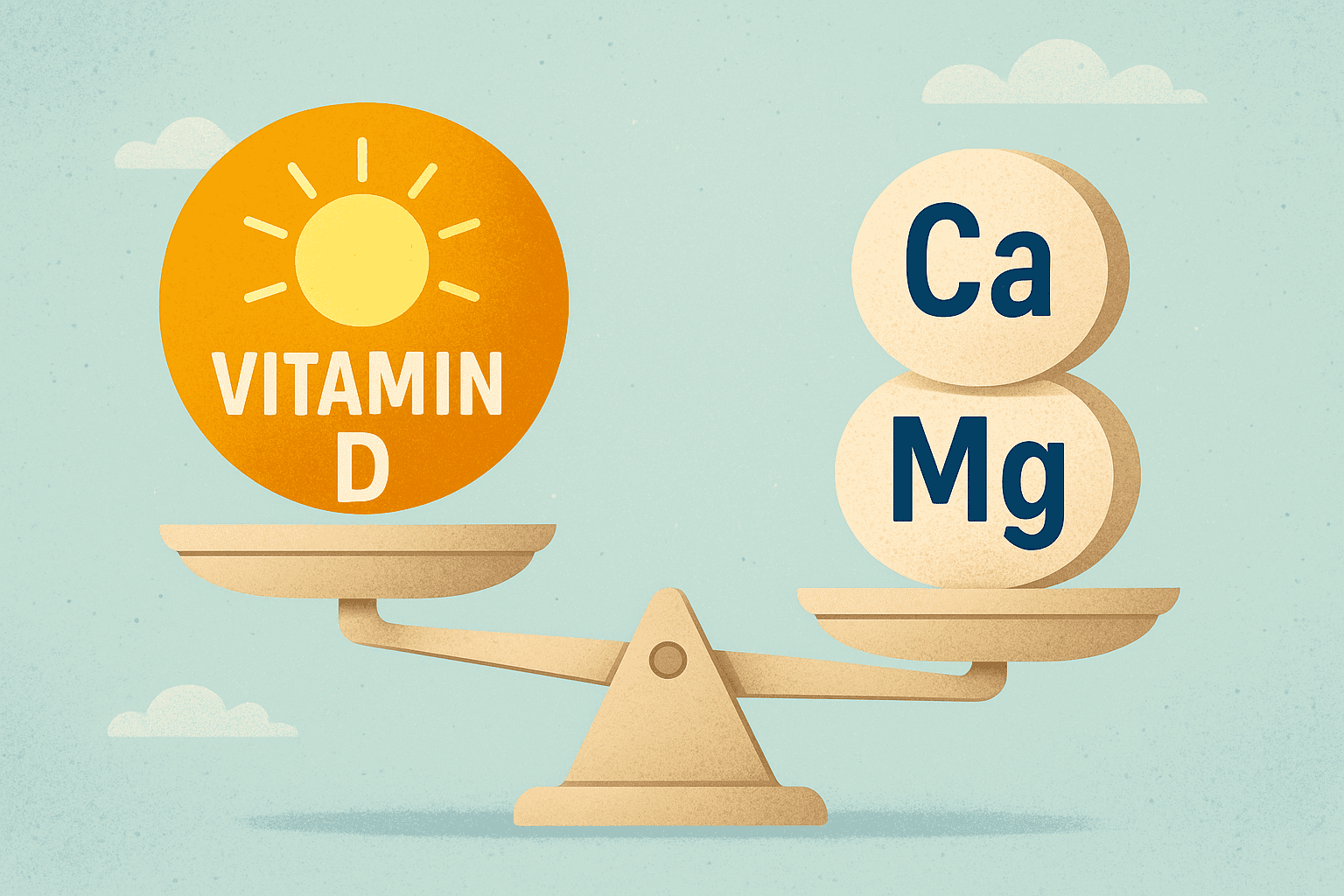
New research underscores the importance of assessing magnesium status and Ca:Mg ratios when addressing vitamin D deficiency.
Vitamin D, although widely supplemented, relies heavily on magnesium as a cofactor in its enzymatic conversion to 25(OH)D in the liver and 1,25(OH)₂D in the kidneys. Magnesium is also necessary for the synthesis of 7-dehydrocholesterol, the precursor to vitamin D₃ in the skin. Without sufficient magnesium, patients may show persistently low 25(OH)D levels despite supplementation.
Patients with low magnesium levels may exhibit suboptimal responses to vitamin D supplementation. Studies suggest that up to 50% of Americans may not meet the Estimated Average Requirement (EAR) for magnesium, often due to high dietary calcium intake and consumption of processed foods. Western diets often provide excessive calcium and insufficient magnesium, resulting in a Ca:Mg ratio >3:1—far from the optimal ~2:1. This imbalance may elevate parathyroid hormone (PTH) levels, impair vitamin D activation, and even promote gut dysbiosis.
The gut microbiome itself influences vitamin D signaling through the production of short-chain fatty acids (like butyrate), indoles, and secondary bile acids—all associated with systemic anti-inflammatory and longevity-promoting effects.
Clinical evidence suggests that replenishing magnesium before or alongside vitamin D supplementation improves patient outcomes and reduces the risk of subclinical deficiency. Additionally, supporting gut microbial diversity with prebiotics, probiotics, and high-fiber diets may amplify vitamin D’s immunological and metabolic benefits.
In practice, consider evaluating Ca:Mg intake ratios, screening for magnesium deficiency, and addressing gut health as part of a comprehensive vitamin D optimization protocol. This integrated approach may be especially relevant in managing chronic inflammation, osteoporosis, metabolic dysfunction, and immune dysregulation.