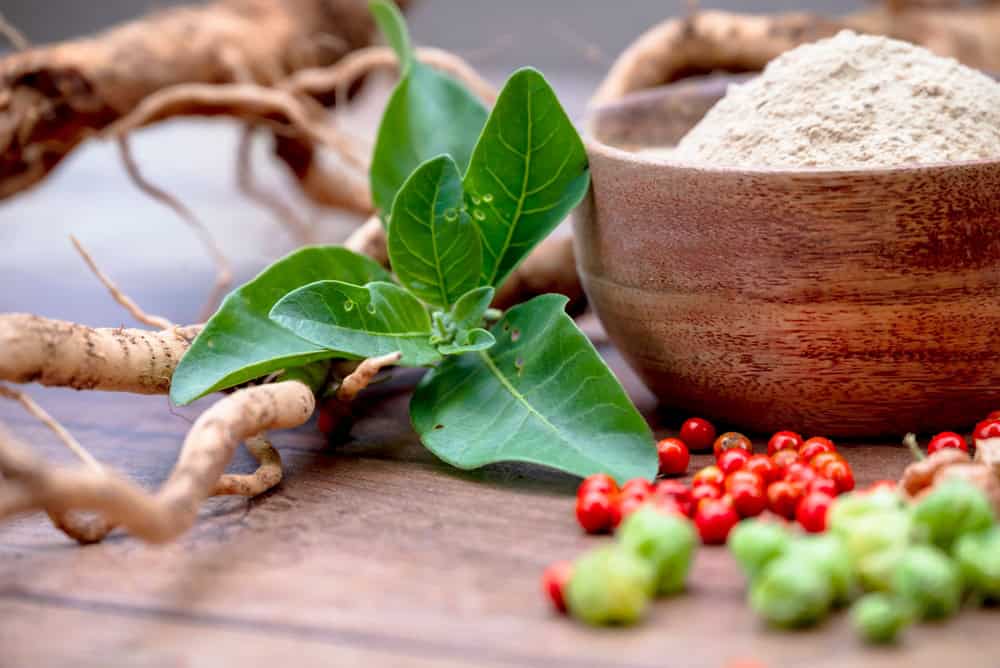
The surge in global demand for Withania somnifera has created a profound supply-demand gap, as annual production of approximately 1,500 tons falls significantly short of the 7,000 tons required by the international market1.
This shortfall is exacerbated by the fact that the plant’s commercial value relies on specific bioactive withanolides, yet current cultivation yields are insufficient to meet the escalating requirements of the supplement sector2.
Furthermore, the industry’s heavy reliance on root-based extracts—which contain the highest concentration of therapeutic phytochemicals—has placed undue pressure on root harvesting, even as research indicates that aerial plant parts also possess significant bioactive metabolites3. Diversifying the raw material input to include leaves could alleviate this harvest strain, particularly as recent studies have identified at least 62 distinct metabolites within the foliage that complement the therapeutic profile of root-derived extracts4.
However, the lack of standardised protocols for integrating these aerial components currently limits their widespread adoption in commercial nutraceutical production. Beyond raw material sourcing, the industry must also address the variable quality of marketed extracts, as clinical efficacy depends heavily on the precise concentration of withanolides5.
The regulatory great divide: roots vs. leaves
While traditional Ayurvedic practices have long prioritised root-based applications, contemporary regulatory frameworks are only beginning to establish the rigorous, GLP-compliant safety data necessary to validate the whole-plant or leaf-inclusive extracts6.
India is the world’s primary producer and exporter of ashwagandha. In April 2026, India’s food regulator FSSAI advised food businesses that only ashwagandha roots and root extracts should be used, excluding leaves and leaf extracts. The Ministry of Ayush issued a similar directive for Ayush products, citing safety concerns related in particular to the higher concentrations of certain reactive withanolides, including withaferin A, reported in leaves.
The development immediately created uncertainty for manufacturers working with leaf or whole-plant extracts. Although the Karnataka High Court subsequently granted an interim stay concerning the FSSAI restriction for the petitioning companies, the wider regulatory situation remains unsettled.
The safety rationale
This coordinated regulatory clampdown was triggered by mounting concerns regarding the safety profiles of aerial plant parts. Ashwagandha leaves naturally exhibit significantly higher concentrations of withanolides – specifically withaferin A – compared to the traditional, centuries-verified root material.
Withaferin A, a compound that some stakeholders argue has a narrower safety margin, while others say existing research does not support safety concerns at typical usage levels. Ultimately, the ongoing debate regarding the safety profile of these phytochemicals underscores the critical need for more robust, standardised clinical research to reach a consensus on appropriate dosages and potential drug interactions7.
Authentication overhaul: beyond total withanolides
For ingredient buyers, compliance is only one side of the coin. The shift toward authenticated, root-only material fundamentally alters quality assurance paradigms.
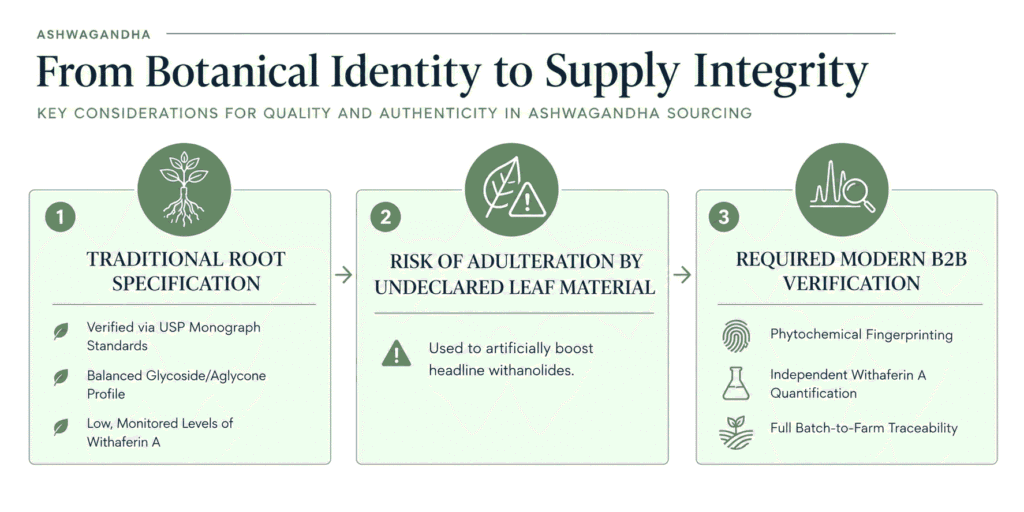
Historically, many high-volume buyers evaluated ashwagandha purely on total withanolide content via basic spectrophotometric or high-performance liquid chromatography (HPLC) assays. This metric alone is no longer an adequate indicator of authenticity. Crude spectrophotometric assays fail to distinguish between individual bioactive steroidal lactones, necessitating a transition toward mass spectrometry-based metabolomics for more precise phytochemical characterisation8.
Because lower-cost, high-yielding leaf and aerial materials are naturally dense in withanolides, unscrupulous or low-tier suppliers can easily utilise leaf material to artificially inflate analytical results while labelling the product as “root extract”. Consequently, advanced analytical validation—such as precise fingerprinting of specific withanolide markers (glycosides vs. aglycones) and independent quantification of withaferin A – is now required to detect undeclared aerial adulteration.
This move toward sophisticated bioanalytical methods is essential for navigating the challenges of isomerism and isobaric interference that historically obscured the accurate quantification of these complex constituents9.
International market access and the pesticide imperative
Strict adherence to rigorous pesticide residue limits – often dictated by stringent European and North American import standards – is becoming the primary barrier for exporters struggling to reconcile traditional smallholder farming practices with global food safety requirements10.
To bridge this gap, suppliers are increasingly transitioning toward controlled-environment agriculture and vertical farming techniques that eliminate soil-borne contaminants while simultaneously enhancing metabolic consistency11,12
B2B sourcing checklist: the supplier qualification framework
Fulfilling quality requirements in this climate means moving beyond the standard, static Certificate of Analysis (CoA). Procurement and Quality Assurance teams must implement a structured vetting matrix for all ashwagandha suppliers (Table 1).
| Evaluation Vector | Audit Criterion & Target Standard |
| Botanical Composition | Demand explicit declaration of plant part composition. Is it 100% root, leaf-derived, or a deliberate whole-plant blend? |
| Geographical Lineage | Map the exact agricultural source. Where was the biomass cultivated, harvested, and subsequently extracted? |
| Identity Validation | Verify the exact analytical methodology used for botanical identification (e.g., HPTLC, DNA barcoding). |
| Withanolide Profiling | Determine how total withanolides are quantified. Does the method distinguish between active therapeutic components and fillers? |
| Targeted Toxin Testing | Ensure independent, third-party quantification of Withaferin A to rule out unapproved leaf spiking. |
| Contaminant Screening | Mandate full-spectrum testing for heavy metals, mycotoxins, and emerging pesticide panels (specifically matching the EU POPs 0.01 mg/kg chlorpyrifos standard). |
| Chain of Custody | Require end-to-end, batch-specific traceability from the raw agricultural collective to the final powder or liquid extract. |
| Destination Compliance | Confirm cross-border alignment with target jurisdictions (e.g., verifying daily dosage ceilings or national restrictions across EU member states). |
Table 1 B2B Sourcing checklist
From price-driven sourcing to strategic risk management
The structural disruption facing ashwagandha highlights a permanent paradigm shift across the broader nutraceutical industry. Procurement strategy can no longer rely on a cost-per-kilogram commoditization model.
Authenticity, validated analytical methods, unassailable chain-of-custody documentation, and regulatory resilience are no longer optional value-adds; they are part of the ingredient specification.
For premium brands looking to protect market share, avoid costly product recalls, and maintain consumer trust, the takeaway is absolute: Qualifying and auditing your ingredient supplier is now just as critical as qualifying the ingredient itself.
By establishing direct partnerships with agricultural cooperatives, manufacturers can implement localised monitoring systems that ensure transparency from seedling to extract.
This integrated supply chain model effectively internalises the costs of quality assurance, protecting firms against the systemic supply shocks that often disrupt the procurement of high-potency raw materials. Moreover, the adoption of blockchain-based traceability platforms allows for the real-time verification of geographic origin and harvest methodology, further insulating supply chains from fraudulent labelling and sub-standard sourcing practices.
References:
- Afewerky, H. K., Ayeni, E. A., Tiamiyu, B. B., Orege, J. I., Okeke, E. S., Oyejobi, A. O., Bate, P. N. N., & Adeyemi, S. B. (2021). Critical review of the Withania somnifera (L.) Dunal: ethnobotany, pharmacological efficacy, and commercialization significance in Africa. Bulletin of the National Research Centre/Bulletin of the National Research Center, 45(1), 176. https://doi.org/10.1186/s42269-021-00635-6
- Xing, Z., Su, A., Li, M., Zhang, Y., He, T., Qiu, Y., Wei, T., Li, Z., Zhu, J., & Wu, W. (2023). Withaferin A: A Dietary Supplement with Promising Potential as an Anti-Tumor Therapeutic for Cancer Treatment – Pharmacology and Mechanisms. Drug Design Development and Therapy, 2909–2929. https://doi.org/10.2147/dddt.s422512
- Bhat, J. A., Akther, T., Najar, R. A., Rasool, F., & Hamid, A. (2022). Withania somnifera (L.) Dunal (Ashwagandha); current understanding and future prospect as a potential drug candidate. Frontiers in Pharmacology, 13, 1029123. https://doi.org/10.3389/fphar.2022.1029123
- Gaurav, H., Yadav, D., Maurya, A., Yadav, H., Yadav, R., Shukla, A. C., Sharma, M., Gupta, V. K., & Palazón, J. (2023). Biodiversity, Biochemical Profiling, and Pharmaco-Commercial Applications of Withania somnifera: A Review. Molecules, 28(3), 1208. https://doi.org/10.3390/molecules28031208
- Paul, S., Chakraborty, S., Anand, U., Dey, S., Nandy, S., Ghorai, M., Saha, S. C., Patil, M. T., Kandimalla, R., Proćków, J., & Dey, A. (2021). Withania somnifera (L.) Dunal (Ashwagandha): A comprehensive review on ethnopharmacology, pharmacotherapeutics, biomedicinal and toxicological aspects. Biomedicine & Pharmacotherapy, 143, 112175. https://doi.org/10.1016/j.biopha.2021.112175
- Balkrishna, A., Sinha, S., Srivastava, J., & Varshney, A. (2022). Withania somnifera (L.) Dunal whole-plant extract demonstrates acceptable non-clinical safety in rat 28-day subacute toxicity evaluation under GLP-compliance. Scientific Reports, 12(1), 11047. https://doi.org/10.1038/s41598-022-14944-x
- Alanazi, H. H., & Elfaki, E. M. (2023). The immunomodulatory role of withania somnifera (L.) dunal in inflammatory diseases. Frontiers in Pharmacology, 14, 1084757. https://doi.org/10.3389/fphar.2023.1084757
- Marney, L., Choi, J., Magaña, A. A., Yang, L., Techen, N., Alam, M. N., Brandes, M. S., Soumyanath, A., Stevens, J. F., & Maier, C. S. (2024). Liquid chromatography-mass spectrometry quantification of phytochemicals in Withania somnifera using data-dependent acquisition, multiple-reaction-monitoring, and parallel-reaction-monitoring with an inclusion list. Frontiers in Chemistry, 12, 1373535. https://doi.org/10.3389/fchem.2024.1373535
- Modi, S. J., Tiwari, A., Ghule, C., Pawar, S., Saste, G., Jagtap, S., Singh, R., Deshmukh, A., Girme, A., & Hingorani, L. (2022). Pharmacokinetic Study of Withanosides and Withanolides from Withania somnifera Using Ultra-High Performance Liquid Chromatography-Tandem Mass Spectrometry (UHPLC-MS/MS). Molecules, 27(5), 1476. https://doi.org/10.3390/molecules27051476
- Tsipinana, S., Husseiny, S., Alayande, K. A., Raslan, M., Amoo, S. O., & Adeleke, R. (2023). Contribution of endophytes towards improving plant bioactive metabolites: a rescue option against red-taping of medicinal plants. Frontiers in Plant Science, 14, 1248319. https://doi.org/10.3389/fpls.2023.1248319
- Hasnain, A., Naqvi, S. A. H., Ayesha, S. I., Khalid, F., Ellahi, M., Iqbal, S., Hassan, M. Z., Abbas, A., Adamski, R., Markowska, D., Baazeem, A., Mustafa, G., Moustafa, M., Hasan, M. E., & Abdelhamid, M. M. A. (2022). Plants in vitro propagation with its applications in food, pharmaceuticals and cosmetic industries; current scenario and future approaches. Frontiers in Plant Science, 13, 1009395. https://doi.org/10.3389/fpls.2022.1009395
- Verdú-Navarro, F., Moreno-Cid, J. A., Weiß, J., & Egea‐Cortines, M. (2023). The advent of plant cells in bioreactors. Frontiers in Plant Science, 14, 1310405. https://doi.org/10.3389/fpls.2023.1310405