Introduction
caffeine is deeply embedded in modern lifestyles, most commonly consumed through coffee and green tea. While both beverages are valued for their ability to boost energy and enhance mental performance, they do not affect the body in the same way. The difference lies not only in the amount of caffeine they contain, but in how that caffeine interacts with other naturally occurring compounds.
As consumer interest shifts toward sustained energy, cognitive performance, and functional health benefits, the comparison between green tea and coffee has become increasingly relevant—not only for everyday consumers, but also for the nutraceutical and functional beverage industries.
Caffeine Content and Perception: More Than Just Milligrams
Initially, coffee seems to be the clear leader in caffeine content. A standard cup typically provides between 80 and 120 mg of caffeine, while green tea contains much less, usually between 20 and 50 mg. However, the physiological effects of caffeine are not determined by quantity alone.
Many consumers report that coffee provides a rapid and sometimes intense energy boost, often followed by a noticeable drop in energy. Green tea, in contrast, is frequently described as offering a more stable and sustained sense of alertness. This difference highlights an important concept in nutritional science: the matrix effect, where the presence of other bioactive compounds alters how a key ingredient—in this case, caffeine—is absorbed and utilized in the body.
Why Green Tea Provides “Calm Energy”
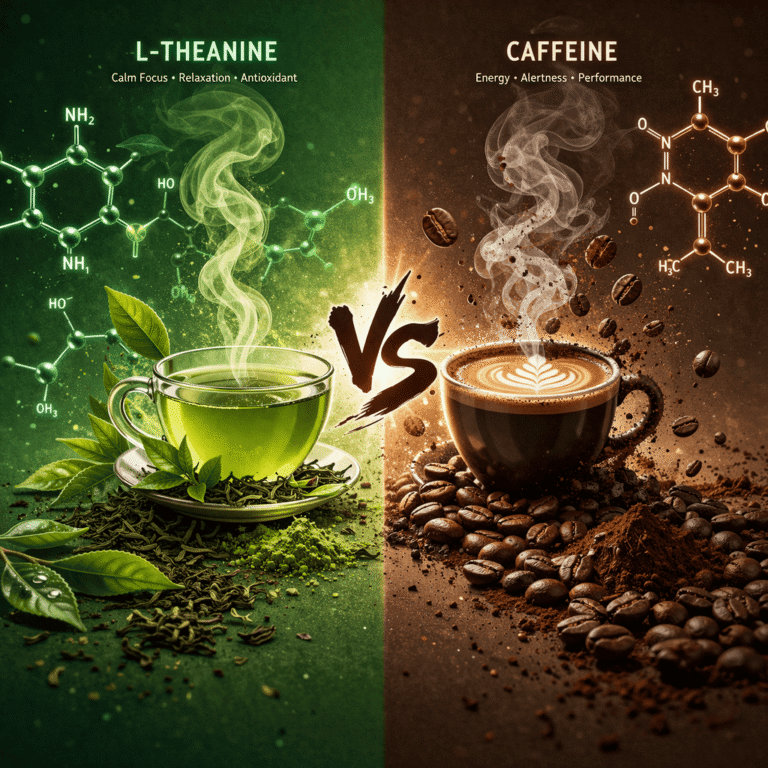
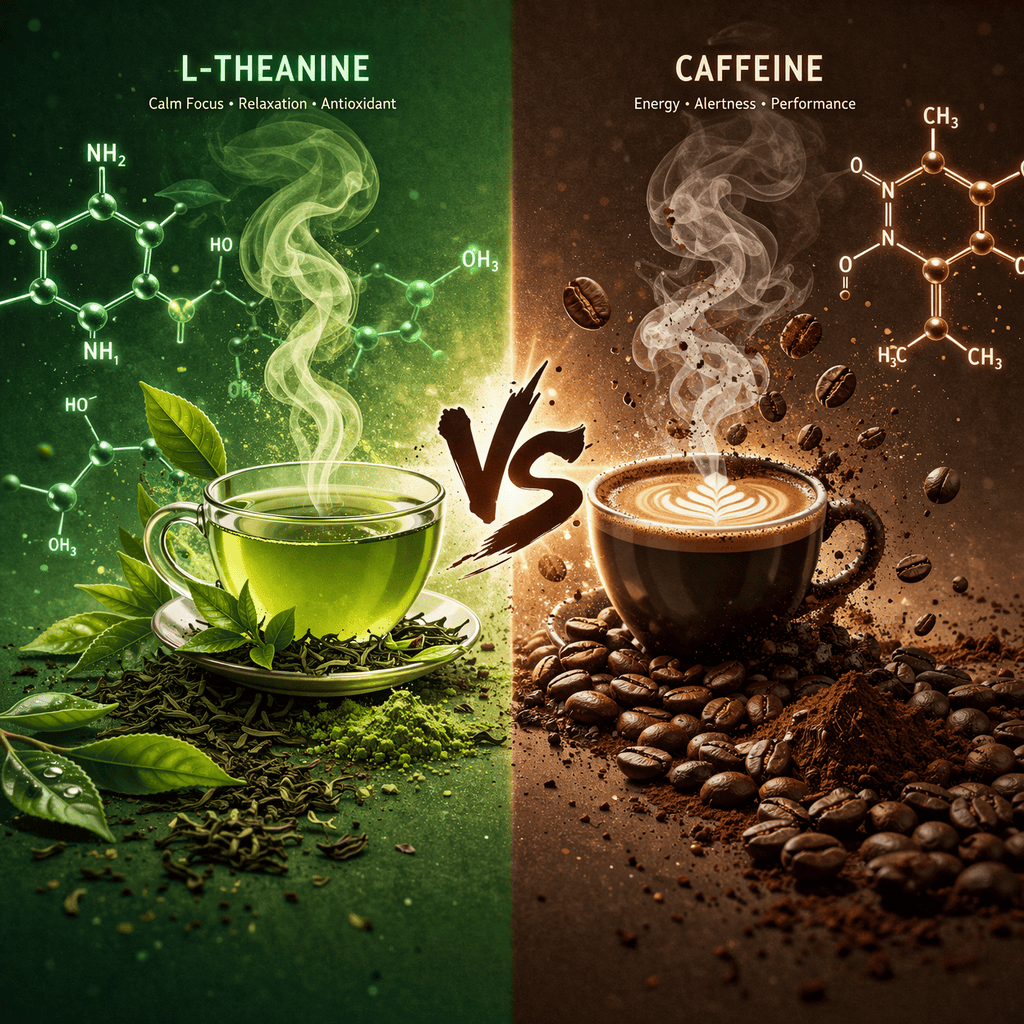
One of the defining characteristics of green tea is the presence of L-theanine, an amino acid rarely found in other dietary sources. L-theanine has a unique ability to influence brain chemistry by promoting relaxation without causing drowsiness. When combined with caffeine, it creates a synergistic effect that enhances focus while reducing the likelihood of overstimulation.
This interaction is particularly relevant in today’s high-performance environments, where sustained attention and mental clarity are more valuable than short bursts of energy. Research suggests that the combination of caffeine and L-theanine can improve attention, reaction time, and cognitive endurance, making green tea an appealing option for prolonged mental tasks.
In addition to L-theanine, green tea is rich in polyphenols, especially epigallocatechin gallate (EGCG). This compound has been widely studied for its antioxidant, anti-inflammatory, and neuroprotective properties, further enhancing the functional profile of green tea beyond simple stimulation.
Coffee: Fast, Potent, and Performance-Driven
Coffee, on the other hand, is often favored for its immediacy. The caffeine in coffee is rapidly absorbed, leading to a quick rise in alertness and energy levels. This makes it particularly effective in situations that require an immediate boost, such as early mornings, demanding work tasks, or physical performance.
Beyond caffeine, coffee contains a complex array of bioactive compounds, including chlorogenic acids. These compounds contribute to coffee’s antioxidant capacity and have been associated with benefits such as improved glucose metabolism and support for weight management.
However, because coffee lacks compounds that significantly modulate caffeine’s absorption, its effects can sometimes feel abrupt. For some individuals, especially those sensitive to caffeine, this may translate into jitteriness, increased heart rate, or a subsequent “crash” in energy levels.
Energy, Focus, and Mood: A Comparative Perspective
The distinction between green tea and coffee becomes particularly evident when examining their effects on energy and cognitive performance. Coffee tends to deliver a sharp increase in alertness, which can be highly effective in the short term but may not always be sustainable over longer periods. Green tea, by contrast, provides a more gradual and prolonged effect, often described as “calm alertness.”
This difference extends to mood and stress response. Green tea is generally associated with a more balanced psychological effect, partly due to the calming influence of L-theanine. Coffee, while beneficial for alertness, may increase feelings of anxiety or nervousness in certain individuals, particularly at higher doses.
Health Implications and Functional Benefits
From a health perspective, both beverages offer valuable benefits, but through different mechanisms. Green tea’s high content of catechins, particularly EGCG, supports cardiovascular health, reduces oxidative stress, and may contribute to long-term disease prevention. Coffee, meanwhile, has been linked to improved metabolic activity and a reduced risk of several chronic conditions when consumed in moderation.
Tolerance and side effects also differ. Regular coffee consumption is more commonly associated with caffeine dependence and withdrawal symptoms, while green tea is generally better tolerated and less likely to cause overstimulation.
Choosing the Right Caffeine Source
Ultimately, the choice between green tea and coffee depends on individual needs and lifestyle contexts. Coffee is well-suited for moments that demand immediate energy and high-intensity performance. Green tea, on the other hand, aligns more closely with the growing demand for sustained energy, mental clarity, and long-term wellness.
For the functional beverage and nutraceutical sectors, this distinction is particularly valuable. The combination of caffeine with L-theanine and polyphenols represents a compelling model for next-generation formulations aimed at delivering balanced energy without compromise.
Conclusion
While both coffee and green tea remain essential sources of caffeine worldwide, their differences go far beyond caffeine content alone. The interaction between caffeine and other bioactive compounds ultimately defines the user experience.
Green tea offers a more stable and controlled form of stimulation, supported by calming and protective compounds, while coffee delivers speed, and immediacy. As consumer preferences continue to evolve toward holistic health and performance, understanding these nuances will be key to making informed choices—and to shaping the future of functional beverages.