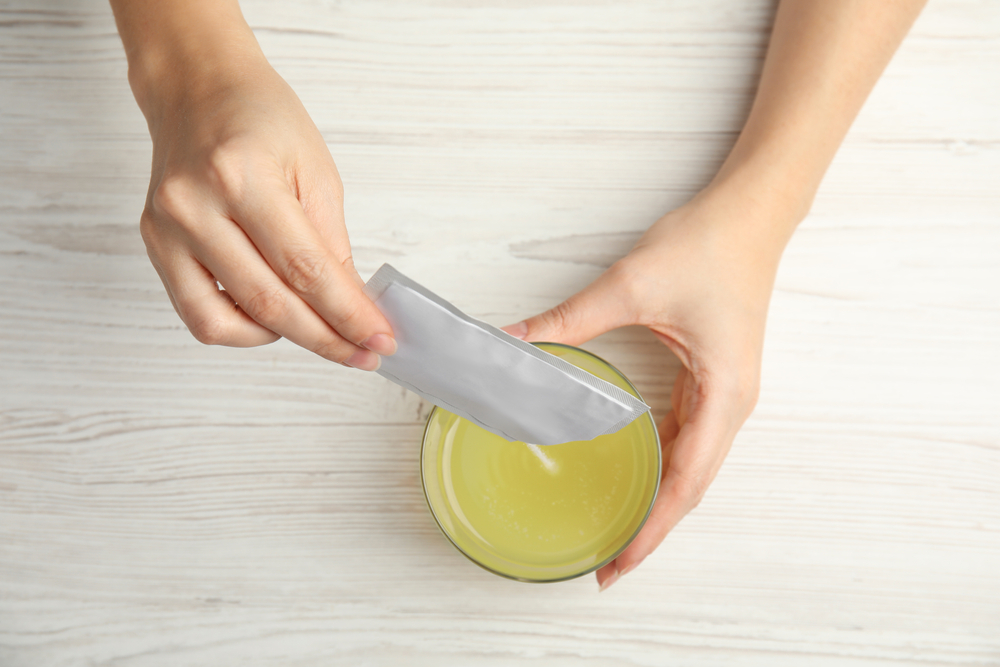
Health and nutrition supplements have been evolving, with hydration formulas taking center stage across the industry. For product developers and manufacturers, the main goal is to ensure that substances such as vitamins or electrolytes can enter the bloodstream. Doing so means the body is ready to use them for their intended purpose.
Author: Beth Rush, a health and nutrition journalist specializing in functional ingredients, food-as-medicine, and women’s health, writes for Health, EatingWell, The Food Institute, and BenefitsPro
Traditionally, many professionals turned to the formula’s active ingredients. The higher the active dosage, the more hydrating a product formula is meant to be. However, its effectiveness may depend more on the engineering of delivery formats.
Delivery formats vs. active dosage
Formula packaging and presentation have been critical factors in product formulation, though often considered only for convenience due to consumer priorities. However, a renewed focus on packaging has had a significant impact on market trends. In 2024, powdered mixes grew by 20% in sales, bringing the industry to $1.5 billion1.
Active dosage was once considered more important for effectiveness. However, delivery format engineering has begun to veer away from simply being a carrier of the active ingredients within a product. Manufacturing companies now realize that the delivery format actually affects how well the body absorbs and utilizes the ingredients.
Active dosage can be less reliable, given that formulations may have limited bioavailability. After all, that dosage would have to undergo various bodily processes, such as digestion and metabolism, before the body can even use it.
Delivery format can improve how a product’s formula is absorbed and transported through the bloodstream. It can even help regulate the release of active ingredients, ensuring maximum effectiveness.
How is bioavailability determined?
Bioavailability is mainly determined by the body’s exposure and reaction to the drug. While every person’s body is different, the configuration of the drug and its regular absorption rate can typically be narrowed down. For instance, intravenous (IV) doses provide absolute bioavailability because they ensure direct delivery into the bloodstream. Given that absorption is critical to reaping the benefits of a formula, it’s important to maximize bioavailability.
Delivery format engineering has proven effective across a variety of supplement categories. For example, standard curcumin has lower bioavailability despite its anti-inflammatory and antioxidant properties. Longvida’s solid lipid curcumin particles increase bioavailability 285-fold compared to standard curcumin powder2.
The same has been seen in hydration formulas. For example, West Bengal Chemical Industries Limited found that liposomal encapsulation can deliver 100 times better performance at lower doses than non-liposomal formulations. It also promotes the sustained release of those active agents, resulting in continuous nourishment3.
Innovative delivery technologies
Delivery format engineering has developed numerous technologies to help pharmaceuticals remain stable.
– Hydrogel technology
Hydrogel is a relatively rigid network of polymer chains that softens in water. Companies can customize delivery formats to swell at different rates, taking into account physiological factors such as temperature and pH levels. As a result, hydrogel technology can provide a controlled and sustained release of drugs into the body4.
– Micellar technologies
Micellar technology is a detailed microencapsulation method for lipid-soluble ingredients, often associated with hydration formulas and liposomal applications. It aims to mimic how the body naturally absorbs fat through the intestinal walls. As a result, the body experiences increased nutrient absorption5.
– Next-generation capsules
Next-generation capsules, also referred to as capsule-in-capsule technology, primarily focus on protecting active ingredients that have low bioavailability in the body. For example, probiotics can have limited benefits for gut health if a consumer’s stomach acidity is too high. This delivery format has the potential to overcome challenges related to drug stability and scalability6.
– Water-free formats
A water-free or direct-to-mouth delivery format is effective for improving consumer adherence and eliminating the need for water. Many non-pill formats, such as chewables and granules, are becoming staples in the industry. That said, further innovations can improve the user experience. For instance, microencapsulation can help cover up bitter tastes without resorting to artificial flavoring.
Key considerations for delivery format engineering
Delivery format engineering requires more time and thought to procure the most effective technologies suitable for hydration formulas.
– User xperience
Product manufacturers should keep user experience top of mind. Hydration formulas already improve physical performance and soothe nerves. That said, these delivery formats offer additional benefits in terms of convenience and absorption.
– Delivery system mechanisms
There are numerous scientific principles underlying each delivery format and its impact on bioavailability. For instance, hydrogels and micelles each have a unique relative bioavailability even without the initial customization that comes with product development. Understanding these mechanisms can help differentiate the efficacy of each one.
– Comparative effectiveness
Absorption mechanisms are only one aspect to consider when running data-driven comparisons of these delivery formats. Factors like absorption rates and clinical outcomes for these nutrients and supplements should also be studied. Even consumer behavior and preferences should be taken into consideration.
– Formulation challenges
These refined delivery systems can improve bioavailability and reduce environmental impact, but there are initial sustainability challenges with formulation7. Some may also come across other hindrances like instability, insolubility and compatibility with active ingredients. It’s critical to address these issues before mass production.
– Regulatory considerations
Regulations governing novel delivery formats, especially in international markets, should be reviewed, as they could impact product development and marketing. For instance, the European Medicines Agency is responsible for reviewing any changes in physico-chemical properties that would affect bioavailability in existing products8.
Invest in true bioavailability
Bioavailability is a key indicator of a product’s effectiveness, and delivery format engineering has proven to be a more influential factor than companies may have initially thought. While active dosage in hydration formulas remains integral, it’s critical to invest more resources in the delivery format of product development.
References:
1. Valinsky, J. (2025, May 24). How America’s obsession with staying hydrated became a $1.5 billion business. CNN. Retrieved June 25, 2026, from https://edition.cnn.com/2025/05/24/food/hydration-electrolytes-drinks-popularity
2. Formulate, F. T. (2026, April 14). Longvida optimized curcumin for maximum bioavailability. Freedom to Formulate. https://freedomtoformulate.com/maximize-bioavailability-of-curcumin-with-longvida/
3. Limited, W. B. C. I. (2026, February 26). Science of Liposomal Encapsulation | High-Bioavailability API. West Bengal Chemical Industries Limited. https://www.wbcil.com/blog/beyond-traditional-supplements-the-science-of-liposomal-encapsulation-wbcil/
4. Ahmed, M. S., Yun, S., Kim, H., Ko, S., Islam, M., and Nam, K. (2025). Hydrogels and microgels: driving revolutionary innovations in targeted drug delivery, strengthening infection management, and advancing tissue repair and regeneration. Gels, 11(3), 179. https://doi.org/10.3390/gels11030179
5. Li, L., Zeng, Y., Chen, M., and Liu, G. (2022). Application of Nanomicelles in Enhancing Bioavailability and Biological Efficacy of Bioactive Nutrients. Polymers, 14(16), 3278. https://doi.org/10.3390/polym14163278.
6. Millet, E., P O’Shea, J., T Griffin, B., Dumont, C., and Jannin, V. (2025). Next generation capsules: emerging technologies in capsule fabrication and targeted oral drug delivery. European Journal of Pharmaceutical Sciences, 214(0928–0987), 107277. https://doi.org/10.1016/j.ejps.2025.107277
7. Hosseini, S. (2026). Current Advances and Challenges in Pharmaceutical Formulation development and Manufacturing: A Comprehensive Review for Industry applications. International Journal of Biomedical Science and Engineering, 14(1), 33–41. https://doi.org/10.11648/j.ijbse.20261401.14
8. Milne, J., Cauchon, N., Beierle, J., Rhee, A., Bonacci, T., Surman, A., Lennard, A., Mark, J., Garden, W., and Burke, S. (2022, October). Regulatory Landscape for Raw Materials: CMC Considerations. ISPE. https://ispe.org/pharmaceutical-engineering/september-october-2022/regulatory-landscape-raw-materials-cmc